
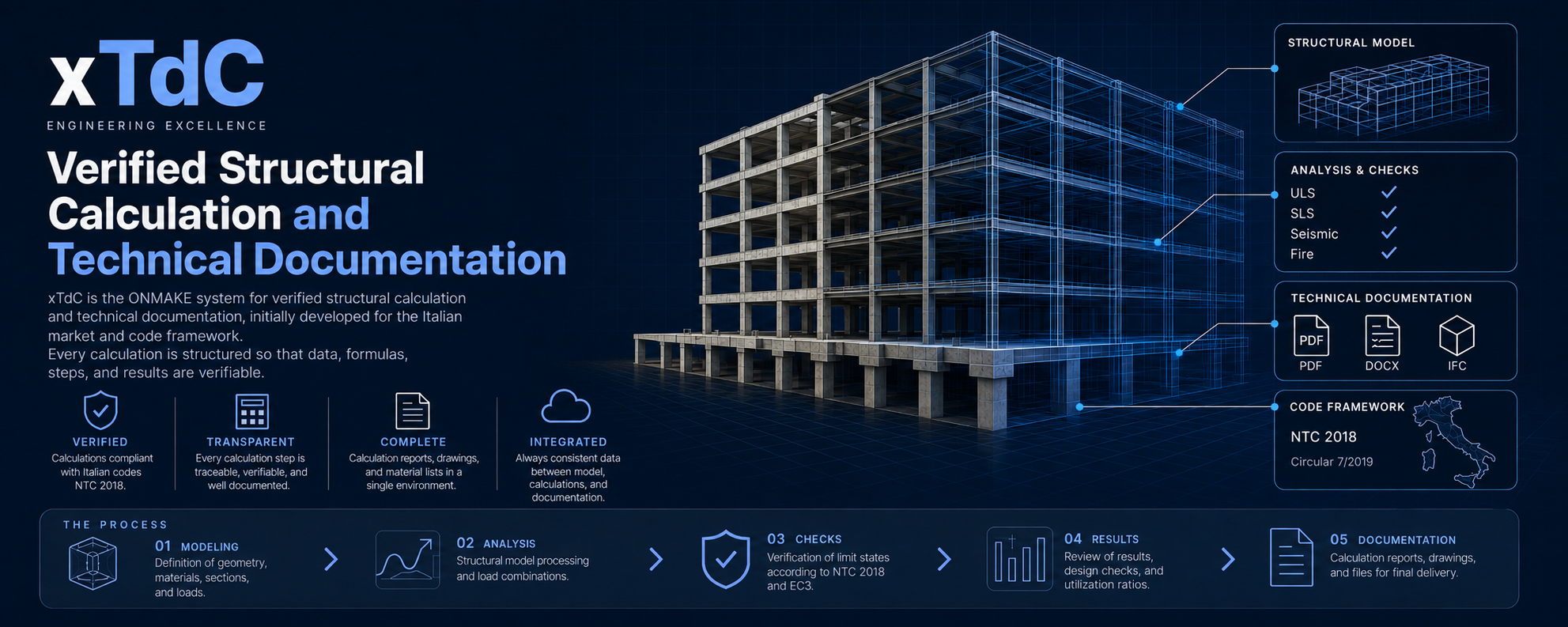
 AI-generated image
 ONMAKExTdCStructural Engineering
xTdC is the ONMAKE system for verified structural calculation and the production of technical documentation, initially developed for the Italian market and regulatory framework. Every calculation is structured so that data, formulas, steps and results remain verifiable.
Free beta for about 30 days, then paid.
The principle
A numerical result on its own is not verifiable. In xTdC every output comes from an explicit chain: the data used, the formulas applied, the steps performed, the checks carried out and the final result all remain visible and open to inspection.
Design data, actions and combinations set according to the criteria of the Italian regulatory framework.
Results checked against the verification criteria and procedures used in Italy.
Every input, formula and intermediate step stays exposed and traceable back to its source.
Guided technical reading: why that value, under which criterion, within which limit.
Technical reports and calculation documentation ready for professional use.
Languages and units
xTdC works in five languages and four measurement systems. Switch them from the Home and from the menu of each section; they apply to every module and to the exported calculation report, in HTML, Excel and PDF, with export to ONMAKE Editor.
In English, numbers use the decimal point and the comma for thousands.
Texts, input fields, tables and the report show the units of the chosen system. The “US moments” switch flips the moment diagram as done in the United States.
The key strength
Every check first shows the formulas applied, then the data with the numerical substitution step by step, then the result, and finally the comparison that declares the check satisfied or not.
That is what makes the calculation understandable to those studying and auditable at review stage for those designing, and directly reportable, without having to reconstruct it by hand.

Modules
Applicable standards, verification criteria and procedures, section databases, units and conventions: each module is set on the technical and documentary context used in Italy, and returns output designed for the project file.
Load analysis and combinations
The starting point of every project: defining the actions and combining them. The module builds the load analysis explicitly, so that the values entering the checks are always traceable to the load item that produced them.
Climatic actions and thermal aspects
Environmental actions require a regulatory path made of zones, altitudes, exposures and coefficients. The module runs it step by step, showing how the geographic input becomes the load applied to the structure.
Structural schemes and internal forces
Modeling the resisting scheme and computing the internal force distribution. Reactions and diagrams are not a final result but a documented step, reusable by the section checks in the material modules.
Design and verification of steel structures
NTC 2018 · Eurocode
Verification of steel members starting from the commercial section database. The module exposes the section classification, the resistance quantities and the comparison with design actions, indicating which mechanism governs the check.
Design and verification in reinforced concrete
NTC 2018 · Eurocode
Design and verification of reinforced concrete sections, from the single section to the structural member. The module pairs reinforcement sizing with the code minimums and required detailing criteria, not just the steel area needed.
Technical reports and calculation file
Documentation is not a final export but the direct consequence of traceability: because every step is already explicit, the technical report assembles itself from the calculations rather than being rewritten afterwards.
Application output
Two real screenshots of xTdC: the static scheme of a frame with reactions and internal forces and the load analysis of a floor slab.
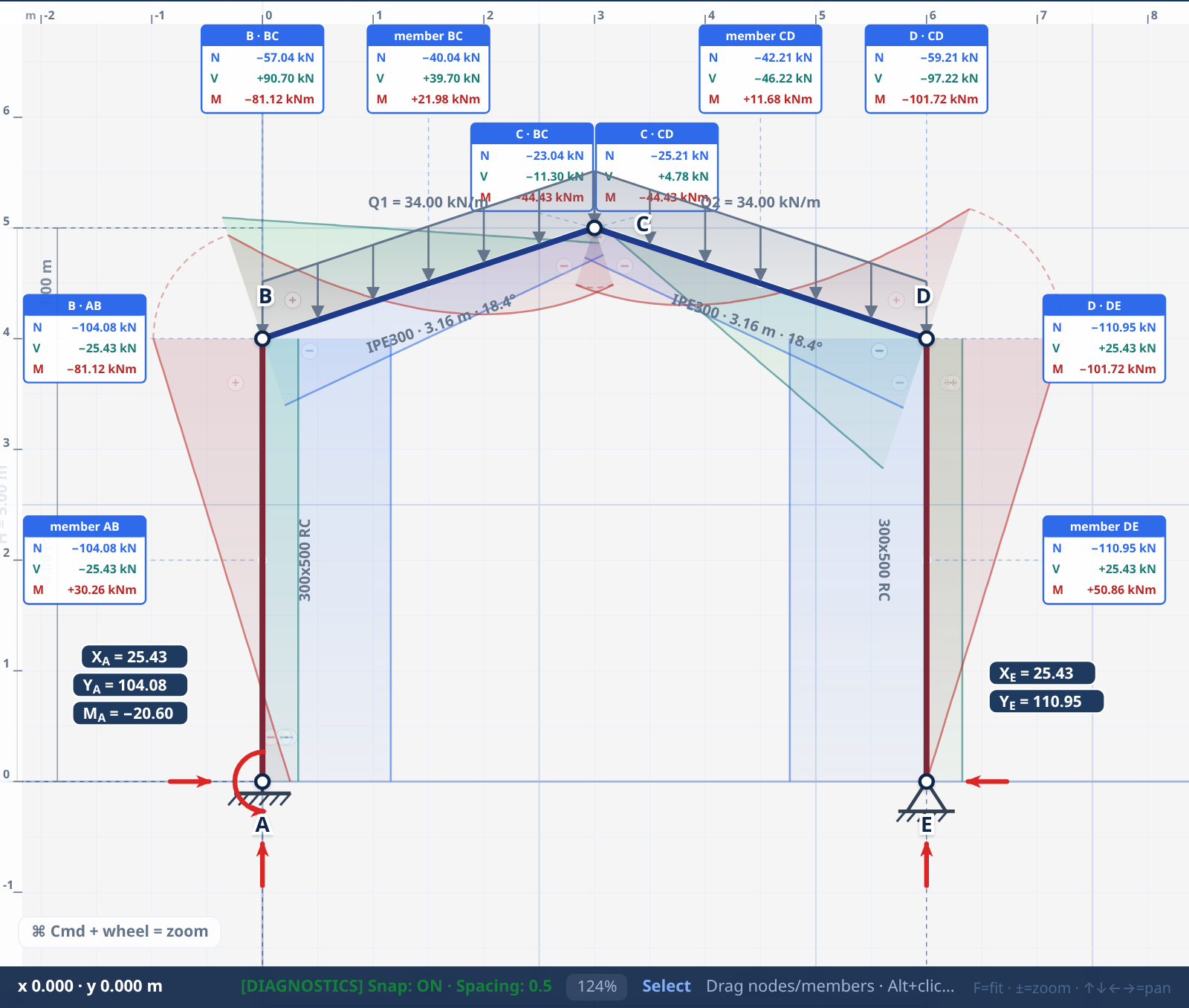
Two-column frame with sloped roof: axial, shear and bending diagrams, support reactions and internal forces at every node.
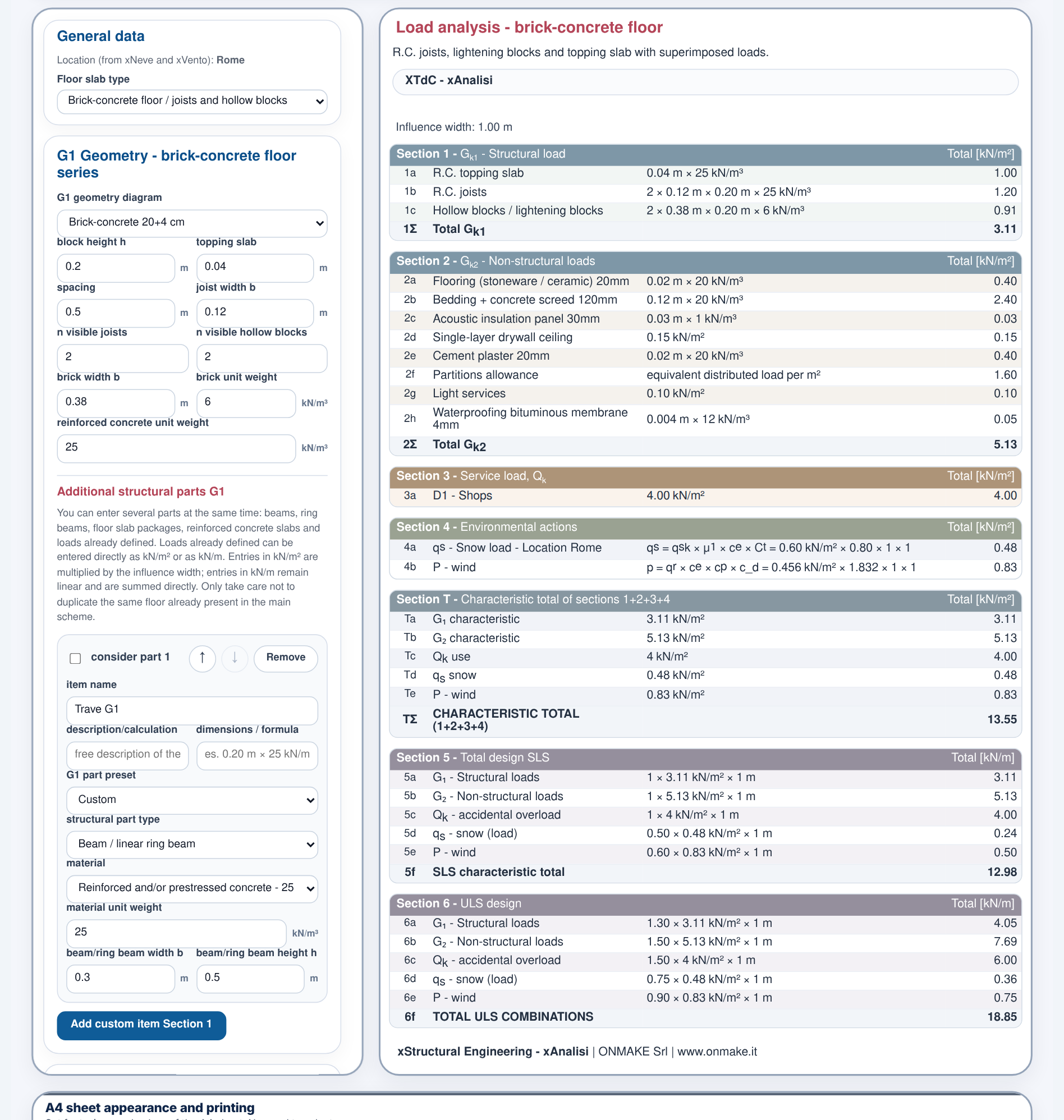
Load analysis of a ribbed concrete floor slab: every structural and non-structural load item and the total per square metre.
xAcciaio
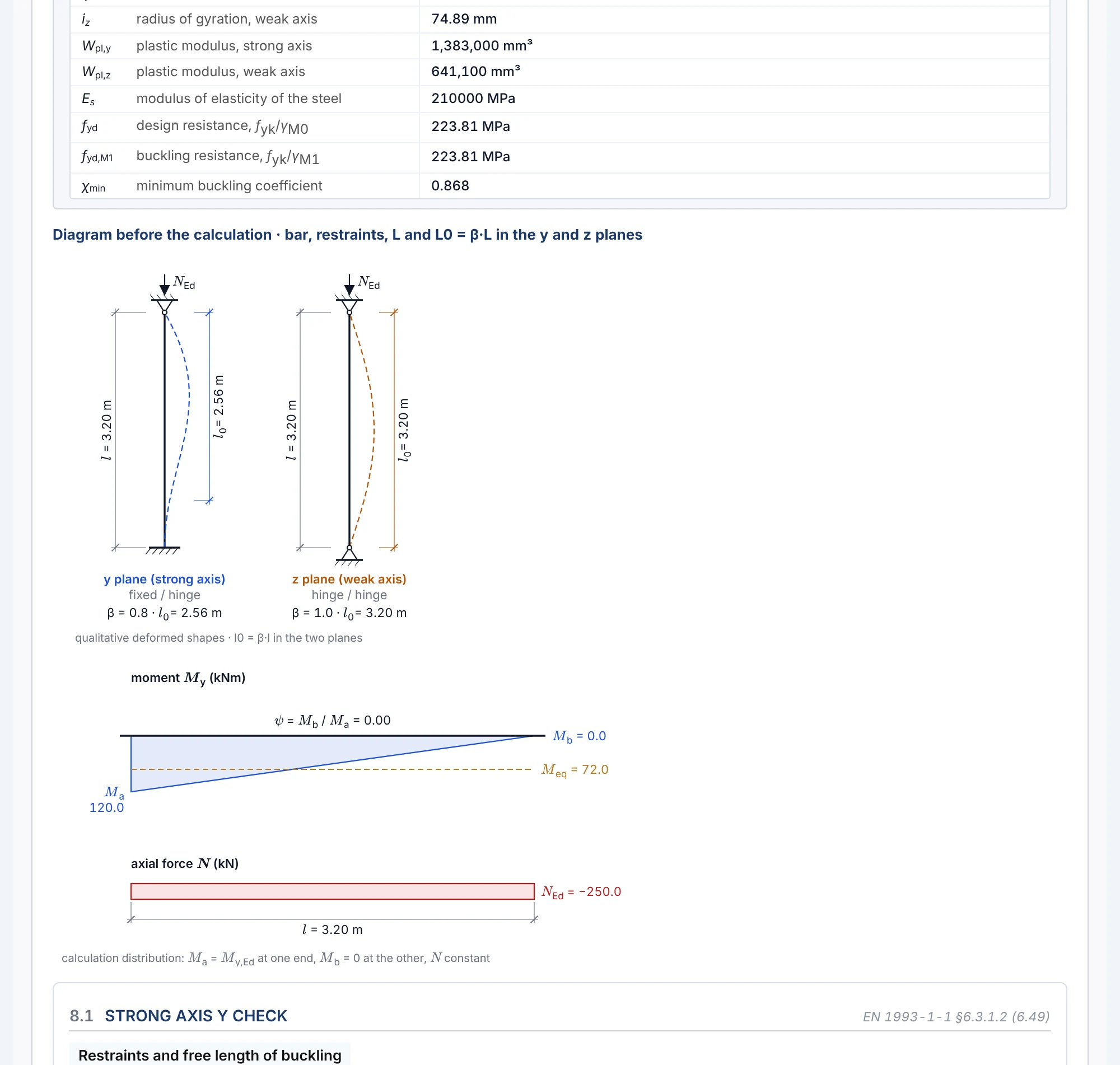
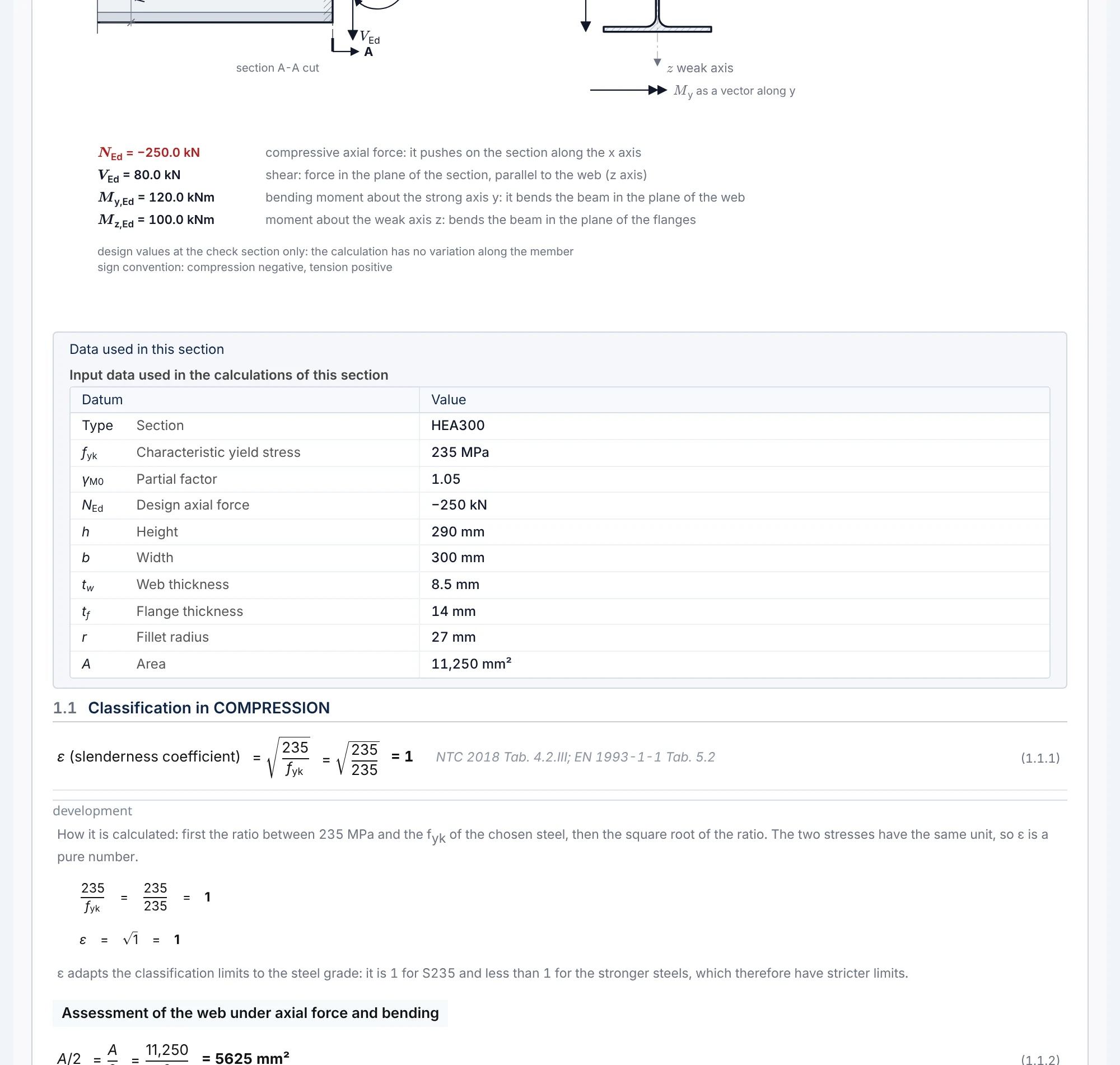
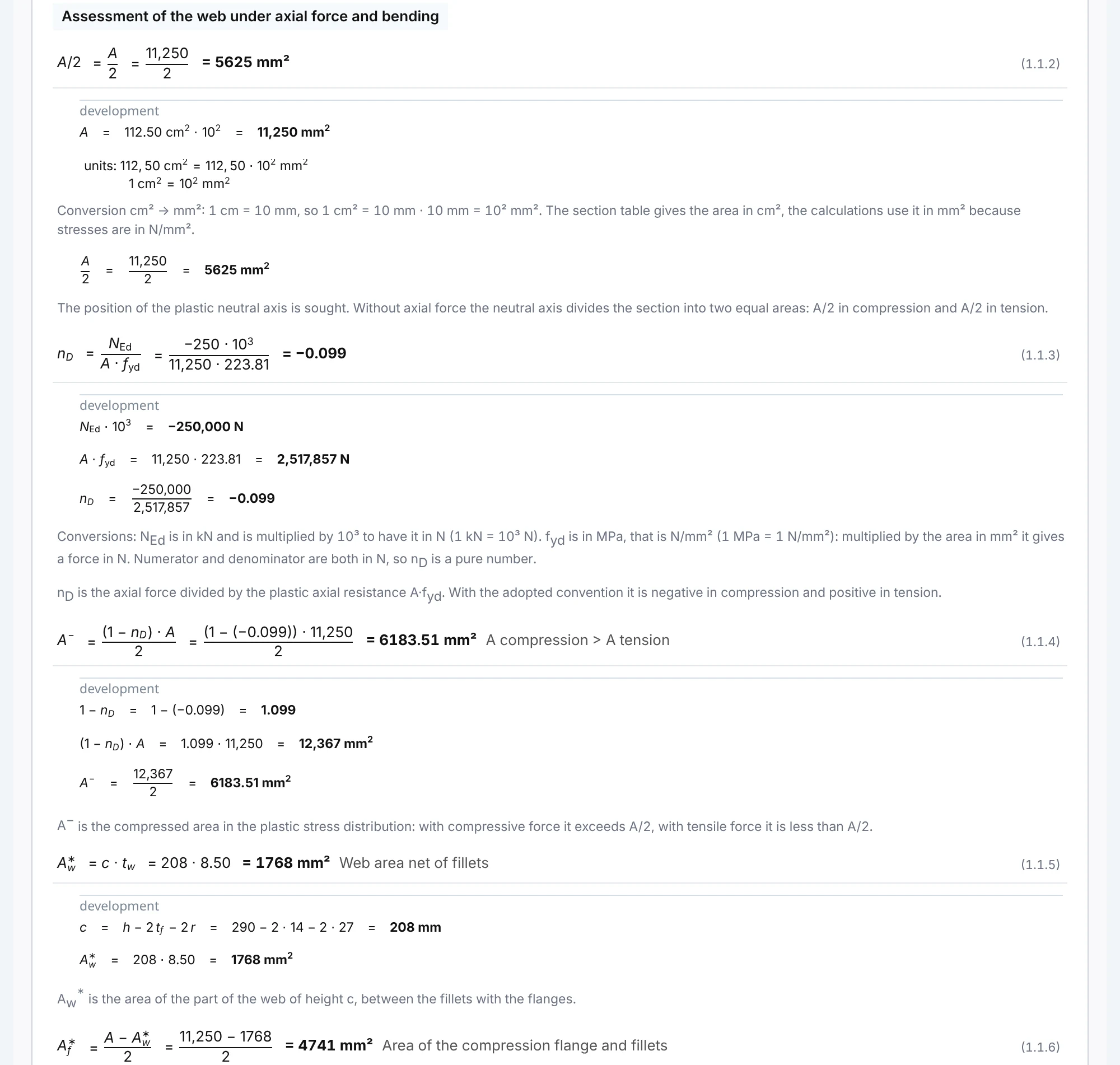
Four real xAcciaio screenshots of an HEA300 column with axial force and bending moment: every formula shows the substituted values, the result, the code reference and where each datum comes from.
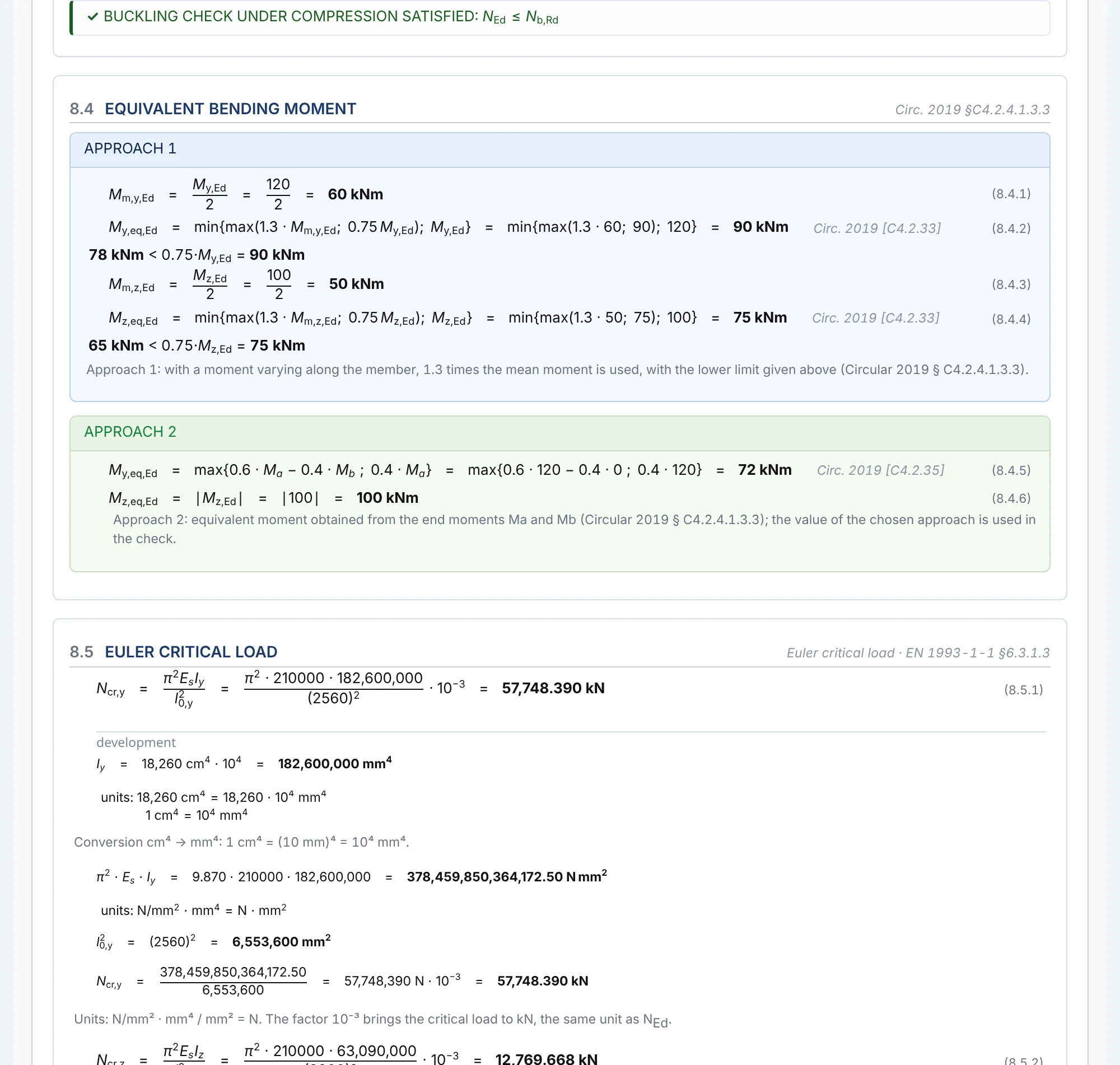
· Interface partly in Italian
· Interface partly in Italian
· Interface partly in Italian
· Interface partly in Italian
xTdC is a support tool for calculation and verification: it does not replace professional responsibility or the signature of the licensed engineer.
Educational and professional use
The traceability that makes a calculation understandable in teaching is exactly what makes it verifiable in professional practice. There are not two versions of the software: there is a single calculation path, readable at two different depths.
For the student the value is not the result but the reasoning that produces it. Seeing the formula applied, the numerical substitution and the acceptance criterion turns the software into a study tool rather than a black box.
For the practitioner the same path becomes documentation. The traced calculation is already in the form in which it must be presented, reviewed and attached to the project file.
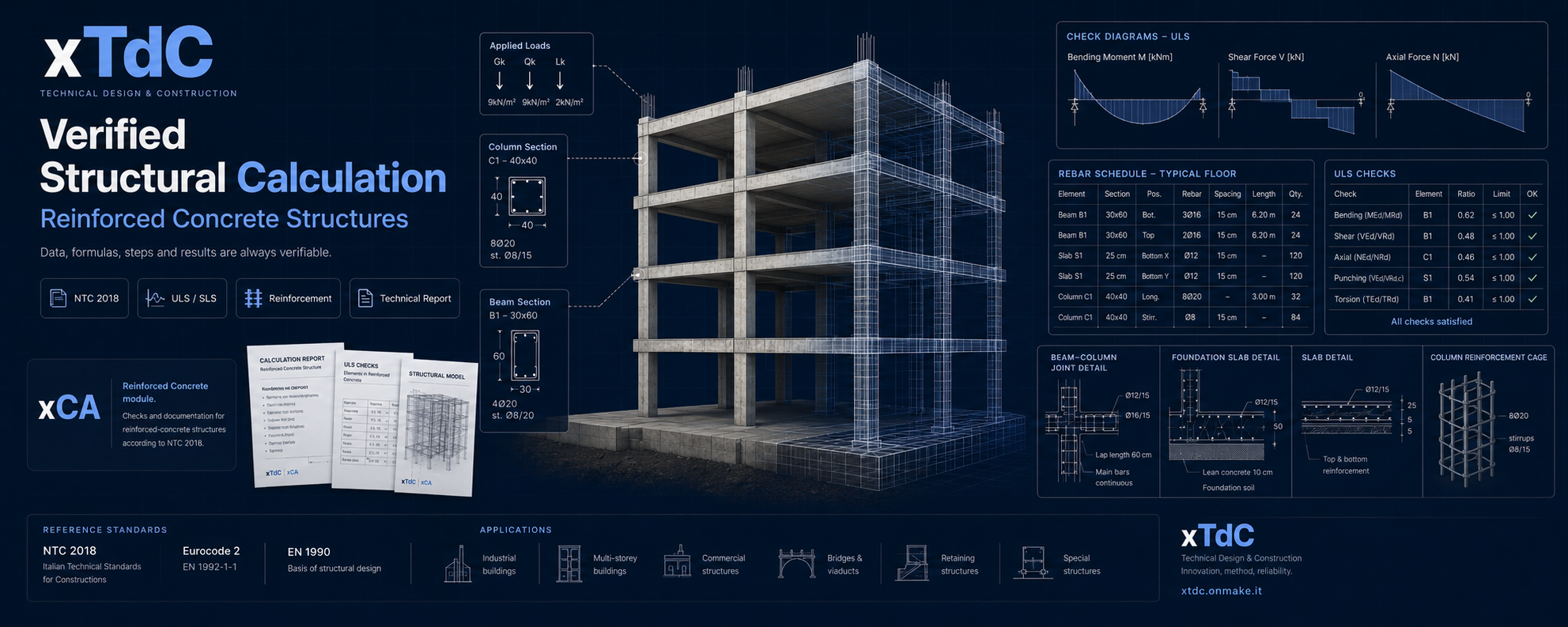 AI-generated image
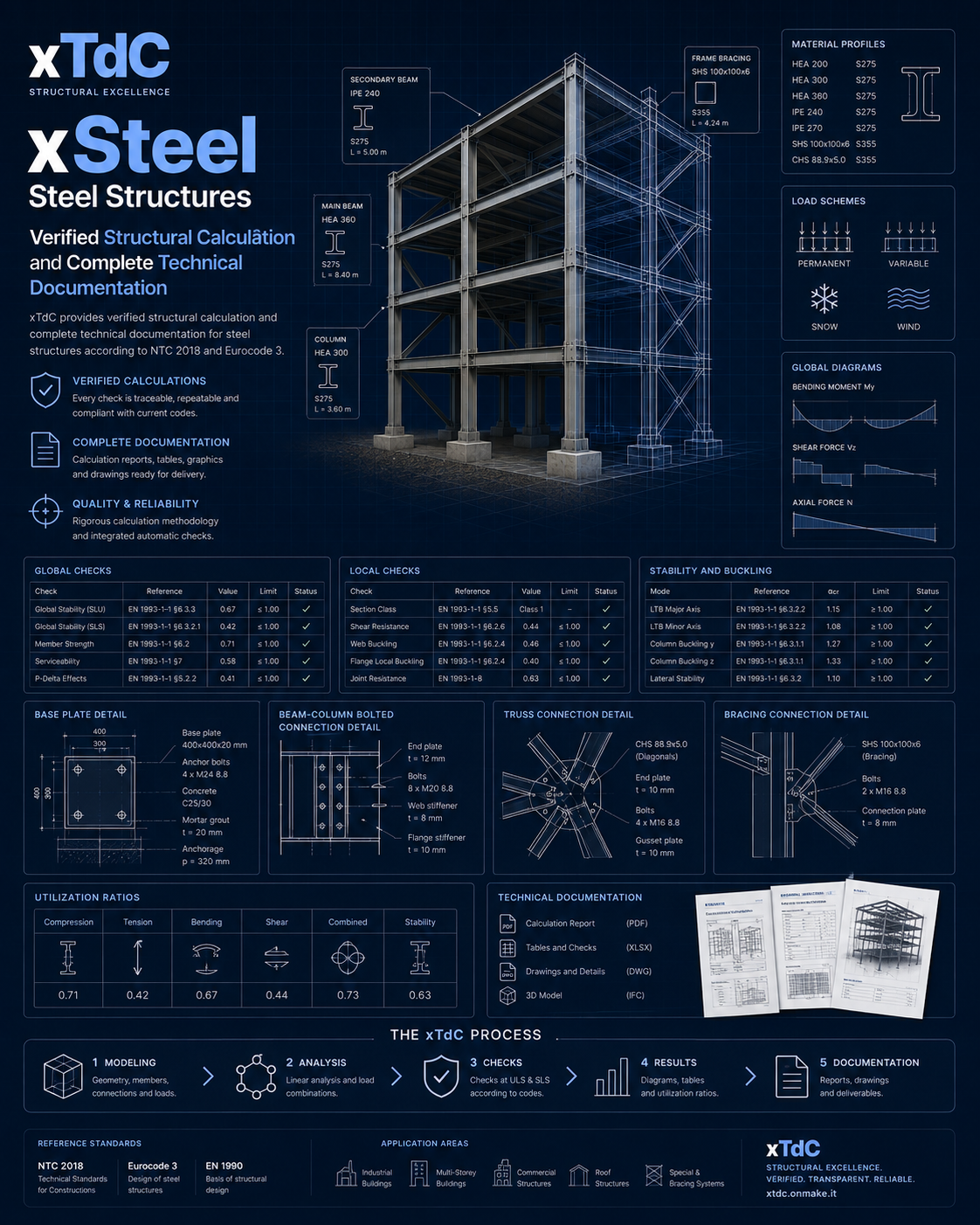 AI-generated image
The images illustrate the technical content covered by the modules. xTdC produces calculation reports, check tables and supporting drawings; it does not replace detailed design and construction drawings, which remain the responsibility of the designer.
Patent & IP Status
Status
Proprietary Technology · Patent Pending
U.S. Provisional Patent Application No.
64/114,486
Patent Applicant & IP Owner:
ONMAKE S.R.L.
Inventor & CEO:
Massimiliano Tulli
xTdC is a support tool for structural calculation and verification. The results produced do not replace the professional responsibility, technical validation and signature of the qualified designer.